HOME page -- Studio Tour -- Equipment -- Services and Price List -- Studio Session Photos
Credits - References -- Independent Work -- Location -- Frequently Asked Questions -- About Me
Links -- Vintage Sessions -- A Visit to Studio 3 -- Les Paul and Mary Ford -- Reeves Youtube Channel
jim@reevesaudio.com
now in
SARASOTA, FLORIDA
Office: 847-409-0437
Autobiography
... by Jim Reeves
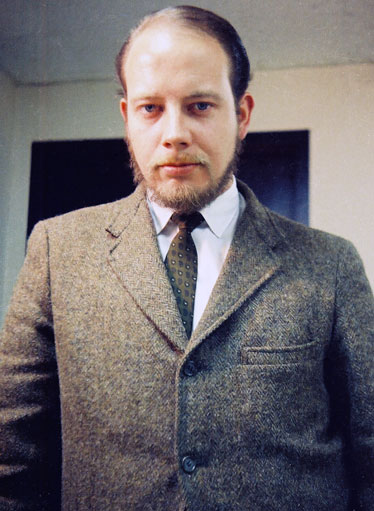
The following is an autobiography of Jim Reeves,
his career as a producer/engineer/singer/technician/artist/composer/photographer/cinematographer
and audio and video recording studio manager/owner.
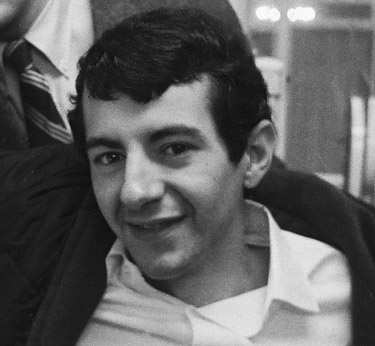
My Control Room in 1957:
by Jim Reeves
JRSL I had been experimenting with my first tape recorder, a Wollensak, hooking it up to the TV speaker in the living room to do my music-minus-one vocal performances. Sort of a '50's karaoke thing. Now, with my own room, I could go crazy, setting up what was to be the advent of my gear ridden life... It started when I added a second tape machine, another Wollensak, so I could multiply my vocal parts by recording one vocal on Wollensak one, and then playing it back to Wollensak two while adding a second vocal part. And so on, back and forth till I got five to six vocal harmony parts done. But, while being incredible to hear yourself doing all the parts yourself, the sound was somewhat hollow because I was using the mic to blend the previous vocal coming out of the speaker with the new vocal which meant that each previous part was being re-recorded through the mic, which made it more distant and "roomy" sounding. So I decided to build a mixer that would allow me to mix the previously recorded part directly to the second Wollensak while adding the new part to it with me on the mic. And that is what I did.
|
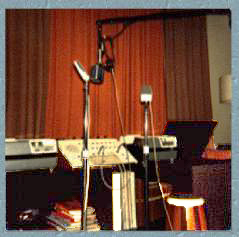 Between the two Wollensak reel-to-reel tape decks was my home made mixing console. There were no audio schools then, so I was pretty much on my own about making stuff work. It took a lot of experimenting. I was given an unused machine shop in Brooklyn Automotive high school to research and develop it. Cutting and drilling the panels, bending them into shape and wiring it up from scratch.
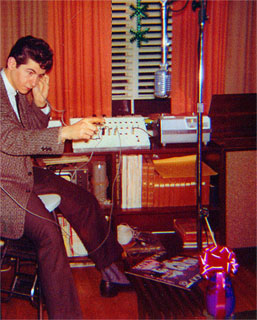 The two Wollensak mics that came with the tape recorders were on Atlas MS-10C stands. Under the console were my audio dictionary and glossary and RCA tube manuals, where I learned the broadcast wiring standards guidelines and component definitions, I.E., "Impedance"- The total opposition a circuit offers to the flow of alternating or any other varying current at a particular frequency. Impedance is a combination of resistance and reactance. The units are measured in ohms. The symbol for impedance is Z."I still can recite that from memory. To the right were my 33rpm LP's, and cataloged in album covers were my 78rpm and 45rpm vinyl record collection, my conga from my trip to Mexico and my Columbia Hi-Fi Stereo phonograph player. It took 2 summers working as a cashier to earn the money to support my dream.


Letter Of Introduction:
| It is difficult to sum up fifty-two years of audio engineering experience in a single page. But after often being asked how I got started in the recording business, I started thinking back. Ever since I can remember, while growing up in Manhattan, dabbling with mechanical and electronic components was a part of me. Gilbert Erector and Chemistry Lab sets, electric trains (see youtube video), construction kits, plastic and balsa wood model airplanes with gasoline engines, co2 propelled racing cars, right up to constructing custom skate boards, go-carts and two story clubhouses right on 2nd Avenue and 62nd street. Early piano lessons from 6 years old became my musical foundation, and my Great Aunt Helen's perpetual harmonizing in my ear led to my vocal involvement in my Doo Wop group at 13 years old and then on to my Jazz harmony big band vocal group, The Progressions, in my late teens.
and bass vocalist extraordinaire: |
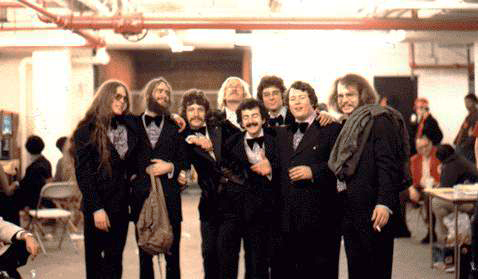
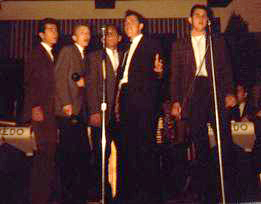 Me, on baritone and sometimes 2nd tenor and falsetto, Johnny Fielder, the best 2nd tenor ever, (classical violinist),Alex Sczylagyi on 1st tenor, Bob Constantino on perfect pitch bass, and the inimitable Hal Peist on Lead vocals, shown here at the Tuxedo Ballroom at 86th street and 3rd Avenue every Sunday Night. Originally known as: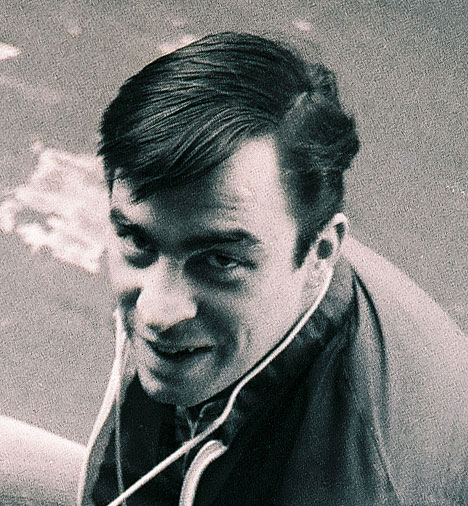
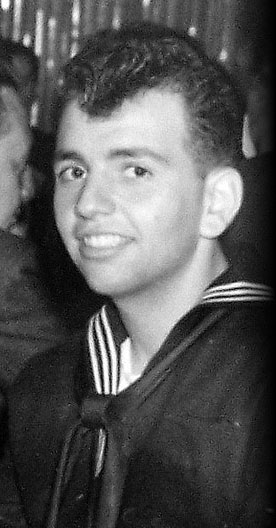 Dan Rivera.
Our 1st place trophy awarded to us in the competition of the best 30 doo wop groups from the five boroughs of NY. Held at Lenox Hill Neighborhood House in Manhattan in 1962.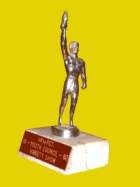 Oh! What a night! |
| I guess, looking back, the natural progression was to combine my electro-mechanical and musical talents into constructing my own home recording studio as a base to develop musical arrangements and to record myself and my vocal group. |
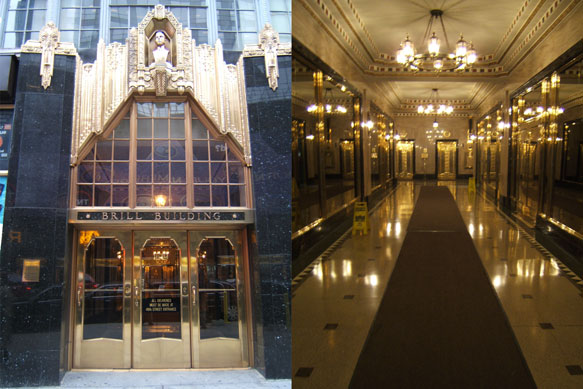 When I began my career as an engineer, there were no high school or college courses for audio engineering. One knocked on studio reception doors for an interview, and most times never got past a disgruntled voice on an intercom speaker in the halls of the Brill Building. When you did get an interview, you might be asked if you were familiar with an Ampex 300 duplicator deck, or a Neumann M-49, and you would be creative (lie) and say, "Of course, why I practically designed it!" or "That's all I used on my last album!" When I began my career as an engineer, there were no high school or college courses for audio engineering. One knocked on studio reception doors for an interview, and most times never got past a disgruntled voice on an intercom speaker in the halls of the Brill Building. When you did get an interview, you might be asked if you were familiar with an Ampex 300 duplicator deck, or a Neumann M-49, and you would be creative (lie) and say, "Of course, why I practically designed it!" or "That's all I used on my last album!" |
But, when I finally got the job working for the guy who built Les Paul and Mary Ford's (see "Les Paul and Mary Ford" below...) home studio in the '40's, Dave Sarser (see "Studio 3" below...), and after fetching 8,000 cups of coffee, mopping the floors and cleaning the toilets, and getting to do mic set-ups and editing 30,000~@#$%^!*> dialogue and music cues, and cutting acetates on Neumann, Scully and Fairchild lathes, and moonlighting recording sessions of my own Doo Wop group for auditions for the gigs we got with WMCA and disk jockey Cousin Brucie, I would eventually get thrown into a session here with the Supremes, and there with Johnny Ray and Benny Goodman, and Ruby and the Romantics.
|
| "Not bad..." I thought, " "...for a start!" But the studio I was working in, as cool as it was, I felt, needed streamlining. So I stayed better "in tune" with these sessions by automating everything that was redundant that I could think of that might have hindered the flow of the previous session; modifying the console, the talk back communication system, playback, cue systems, echo chambers, mic pre's, deck alignments, the room acoustics, and aesthetics. By the time Sarah Vaughan and Leslie Gore showed up, I was a lot closer to "capturing the moment". I still maintained my own JRSL studio at home, just so I could be more involved in developing new production techniques, and my own music. |
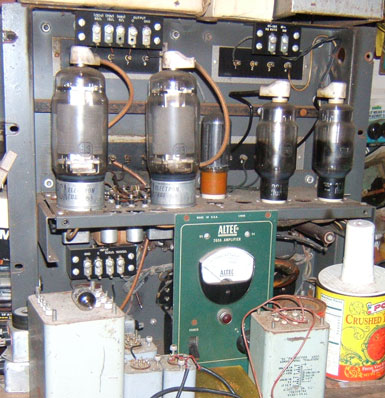
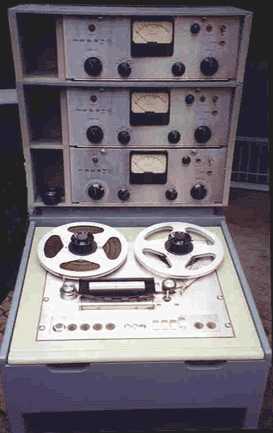 A-1 Sound's 3 track Presto Tape Recorder, Model 825 introduced in '57. |
 As my engineering career was growing, and 3 track was becoming obsolete, and tubes were turning into transistors, I was encouraged to become more and more involved in constructing 4 to 8 track studios for clients like Luther Dixon, Eddie Singleton, Jeff Barry (The Monkey's) and Bert Berns of Bang Records (Rickey Derringer & The McCoys/Tommy James & the Shondells/The Young Rascals). I even designed and installed telephone patches in Screen Gems and April Blackwood Music so As my engineering career was growing, and 3 track was becoming obsolete, and tubes were turning into transistors, I was encouraged to become more and more involved in constructing 4 to 8 track studios for clients like Luther Dixon, Eddie Singleton, Jeff Barry (The Monkey's) and Bert Berns of Bang Records (Rickey Derringer & The McCoys/Tommy James & the Shondells/The Young Rascals). I even designed and installed telephone patches in Screen Gems and April Blackwood Music so 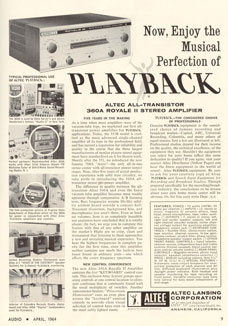 they could audition songs directly over phone lines (as a result of my technical tutoring from inspirational mentors and knowledge givers, Dave Sarser-Studio 3, Grant Ellerbach of Kapp Records, Penn Stevens and Paul Prestopino at the Record Plant and Eric Porterfield of Columbia Records. I won't forget them). they could audition songs directly over phone lines (as a result of my technical tutoring from inspirational mentors and knowledge givers, Dave Sarser-Studio 3, Grant Ellerbach of Kapp Records, Penn Stevens and Paul Prestopino at the Record Plant and Eric Porterfield of Columbia Records. I won't forget them). |
|
In 1963, I was introduced to Skitch Henderson's Studio 3, created by Dave Sarser, Skitch and wife Ruth, hence the name Studio 3, as a private Jingle Production House. It is where I cut my teeth as a recording engineer. I was commissioned by his partner, my mentor, Dave Sarser to install a sound system. Dave was the resident active partner in the studio, while Skitch spent most of his time at 30 Rock, conducting the Tonight Show Orchestra for Jack Paar and Johnny Carson. I was often asked by Skitch to install home-audio systems in the homes of Vincent Sardi, of Sardi's Restaurant and Art Stark, producer of The Tonight Show, George Hyam, Owner of The Top Of The Fair Restaurant at The 1954 World's Fair, Schyler Chapin, CEO of Lincoln Center. He sent me to The Flamboyan Hotel in Puerto Rico to overhaul their sound system. I can tell you that each one of these experiences could produce a book. Dave Sarser, a violinist for Toscanini with the NBC Symphony Orchestra, an audio recording engineer, Television Music Director, Altec amplifier designer, Ampex east coast sales rep, a forerunner cassette high speed duplication systems designer, Les Paul's technical confidant and friend. Dave Sarser, had previously installed the sound system for a private noir speakeasy on east 55th Street, right off the East River Drive in Manhattan discretely known as Le Club, where you were greeted through a sliding peephole window at the door before entry was permitted. It was a very "cool" sophisticated but yet beatnik atmosphere with black walls and The owners who had created The Barge in South Hampton, where acts like The Young Rascals had originated, asked Dave to put a similar system in their new endeavor to address a more public "jet set" clientele. It was named Ondine after the Olympic sailboat for which the club's interior reflected. As it happened, Dave declined and so he assigned the job to me. I had to install a sound system in what would become the first Manhattan Discotheque open to the public. Ondine. In the early 60's, when the "Music Revolution" was beginning, the sound systems in Manhattan clubs were not equipped to handle the heightened energy of the acts that were to follow. |
My Control Room in 1964:  |
I moved into my first apartment. A newly renovated walk-up. Naturally, I got the top floor studio apartment. The fifth floor, which was legally the max height before an elevator would have to be put in. My first Shure 55 dynamic cardioid mic hanging from my Atlas boom stand had long been sold to my first client/friend Butch Giacomontonio. My first apartment on 89th Street in Manhattan was now the home of my new custom made console which was as close a replica of Dave Sarser's Pultec Blue Console as I could make. The panel was made from a discarded Burrough's Business Machine's computer desktop that I brought to my old high school's machine shop (at Brooklyn Automotive). I cut and folded it, drilled it out and built a plywood cabinet for it. I was eventually able to get the components for my console on Courtland Street in downtown Manhattan, famous for old army surplus radio parts (cheap). I got the Allen Bradley pots and RCA industrial knobs, 3 position toggle switches and Graybar telephone type pushbutton switches there after much scrounging. I wired it up, added the tube preamplifiers that I got from Dave Sarser as salary for engineering my first project for him, and cloned additional pre-amps from those, that I constructed and wired myself. They served as the console's summing amps and program amps and were mounted beneath the panel that I painted Burrough's Blue, (kinda' like "Pultec Blue"-ish) from spray paint I got from working at Burroughs Business Machines. |
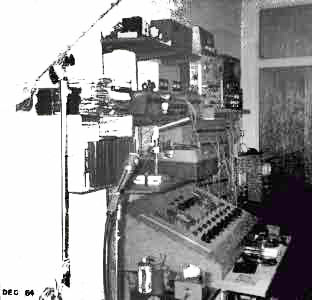 (The mic in the foreground was my Electro-Voice 666 dynamic mic and an Electro-636 just past that). |
The audio patch bay was made from what was formally an old video patch bay discarded from Metromedia's television studios (Channel 5 TV NY). When it arrived at my house, I rewired my two Eico Master Control HF-61 On the shelf above that was my self-built Dyna-Kit power amplifier. And the prototype experimental amplifier chassis used by Fisher to develop their X-101 amplifier. Dave got it for me for $10. It served as the studio playback amp. The shelf just above the console held my Empire Troubadour Dynamic belt driven turntable, my Electro-Voice 666 and 636 shotgun mics, and my 45rpm collection. Above the patch bay cabinet was my American Concertone 505 reel to reel tape recorder that Dave got me from trumpeter Bobby Hackett. It sat on the shelf next to my Eico reel to reel tape recorder. The 4 stepped attenuators for the meters were just beneath the Concertone deck. My "hot-rodded" Eico 377 sine and square wave audio generator |
| When my downstairs neighbors, Ted and Betty moved out of their leased apartment a month early, they left me their keys and a supply of Betty's peach cobbler. I flew my mic cables out the window into their vacant apartment and called Butch's brother, Mickey Gee and the G 3 and had my first very own, full blown, independent, split-level album session in Ted and Betty's place at 252 East 89th Street in Manhattan in 1964. |
Later in the `60's...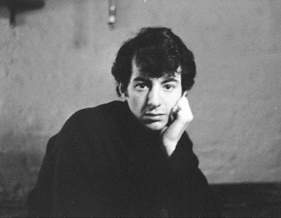 |
| (twenty albums, five studios i.e., Studio 3, Talentmasters, Incredible Sounds, Le Studio, Jaysina, A-1 Sound, Regent, Kapp, and eight years of engineering later), while producing two groups for United Artists (Dream Spectrum) and Epic Records (Phil Galdston's CISUM) at CBS, V.P. John McClure set up an interview for me when a staff engineer position opened at Columbia Records. CBS did hire me with a certain enthusiasm that I won't forget. They asked me to splice (razor blade edit)some tape recorded music together. My g-zillions of prior editing experiences paid off in a big way. |
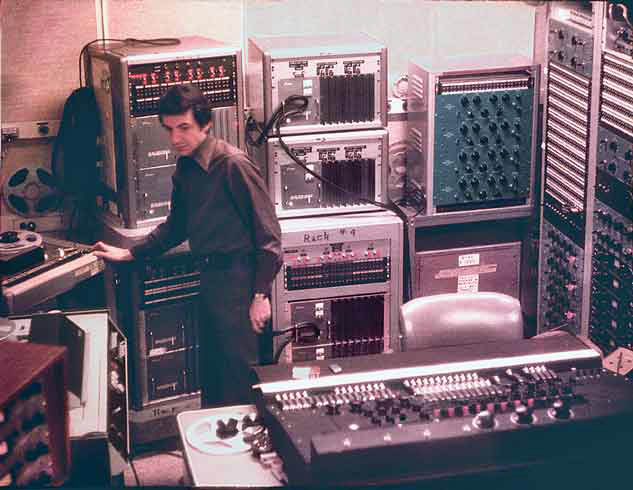 making the "first released" Dolby Album in history! (See "References" below...) |
So you make their records for them, why not? You want to help Bobby Vinton make a hit record, don't you?...and Johnny Winter (and...Live) and Edgar Winter (Free Ride), and George Harrison/Bob Dylan/Peter Asher, and talent like that. And with everything you and Columbia Records, with their sophisticated technology, can offer, in order that they may compete in the world marketplace, you do it! What a great time to be in it. |
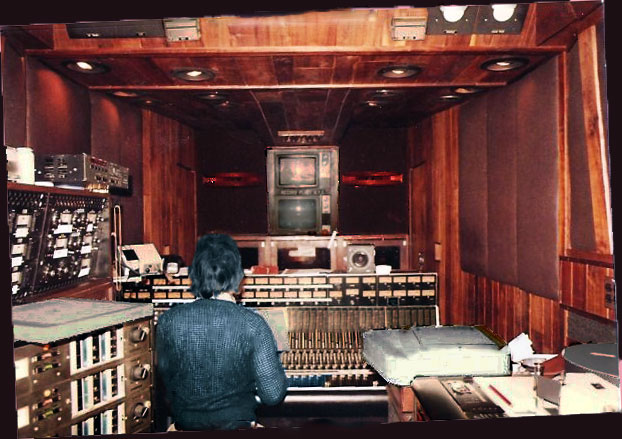
M eanwhile Gregg Allman (Laid Back), Mott the Hoople (live at the Uris Theatre), Lou Reed (Berlin), Martin Mull and ZZ Top's (Fandango) managers started calling and wanted me to engineer their albums. That was when I discovered the Record Plant Recording Studios. A new wave of recording environments. Here's an engineer's dream: super talented artists, plus technological sophistication in studios, neatly tying a home environment to state-of-the-art electronics. And then they even put one in a truck(!)...which one would be glad to manage and engineer out of, for three or four years. So I did just that. eanwhile Gregg Allman (Laid Back), Mott the Hoople (live at the Uris Theatre), Lou Reed (Berlin), Martin Mull and ZZ Top's (Fandango) managers started calling and wanted me to engineer their albums. That was when I discovered the Record Plant Recording Studios. A new wave of recording environments. Here's an engineer's dream: super talented artists, plus technological sophistication in studios, neatly tying a home environment to state-of-the-art electronics. And then they even put one in a truck(!)...which one would be glad to manage and engineer out of, for three or four years. So I did just that. |
|
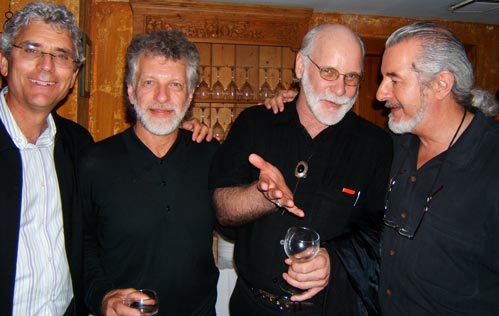
Around 1975, I was approached by a New York nightclub entrepreneur, Jimmy Pullis, (aka JP, who I had first met outside Ondine hawking Timothy Leary albums under both arms). He commissioned me to install a hi-tech sound stage in his club, audition and book live acts as "candidates" for the record labels. But, at our JP's reunion 2011,
The club turned out to be a sensational venue and so I made a little history... and then, I ended up going out on the road with these guys, all over the world, mixing in 24,000 seat convention centers.
|
Then, independent jingle composer, 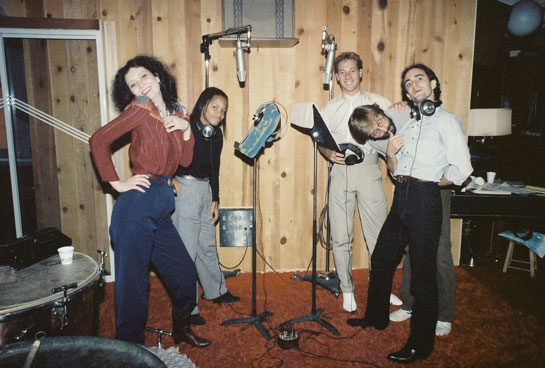 Edd Kalehoff came into the picture and asked if I was interested in co-producing jingles. What engineer doesn't crave string and horn dates, tons of background singers, choruses, synths, midi sequencers, all locked to video, recording 20 to 50 piece orchestras daily? Or starting at nine in the morning with a piano road map and click track, then overdubbing the rhythm section, harp, tympani, percussion, background and lead vocals, voice-overs, and by six you've mixed ten 30 second spots to be aired nationally on the Super Bowl the next day and get residuals five days a week for five years? As well as managing his 24 track recording facility. You'd probably amuse his offer and go for it. I graciously accepted Edd's offer. Finally, a great job, with income! I also got to produce some bands there. Then... Edd Kalehoff came into the picture and asked if I was interested in co-producing jingles. What engineer doesn't crave string and horn dates, tons of background singers, choruses, synths, midi sequencers, all locked to video, recording 20 to 50 piece orchestras daily? Or starting at nine in the morning with a piano road map and click track, then overdubbing the rhythm section, harp, tympani, percussion, background and lead vocals, voice-overs, and by six you've mixed ten 30 second spots to be aired nationally on the Super Bowl the next day and get residuals five days a week for five years? As well as managing his 24 track recording facility. You'd probably amuse his offer and go for it. I graciously accepted Edd's offer. Finally, a great job, with income! I also got to produce some bands there. Then... |
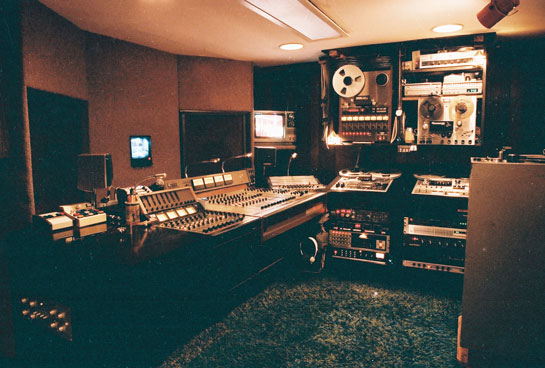 In 1983, having two kids, who tend to rewrite the script for you, I moved to Westchester N.Y. and built a studio in my house... and my own clientele to match. And for eight years I worked with New York-based composer/musician/producer types, producing jingles, albums, TV themes, composing on computer based midi sequencers locked to the tape transport for the analog stuff, and it's going great. By the '90's my wife got homesick for Illinois, and sick of me too, so we moved near her home town of Winnetka, to Wilmette while the boys got their act together. In 1983, having two kids, who tend to rewrite the script for you, I moved to Westchester N.Y. and built a studio in my house... and my own clientele to match. And for eight years I worked with New York-based composer/musician/producer types, producing jingles, albums, TV themes, composing on computer based midi sequencers locked to the tape transport for the analog stuff, and it's going great. By the '90's my wife got homesick for Illinois, and sick of me too, so we moved near her home town of Winnetka, to Wilmette while the boys got their act together. |
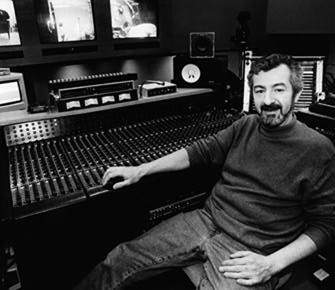 |
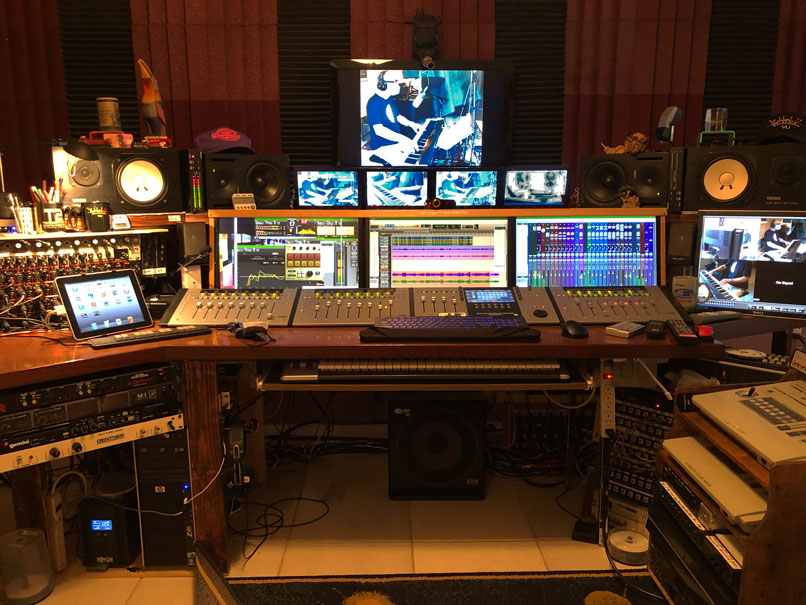
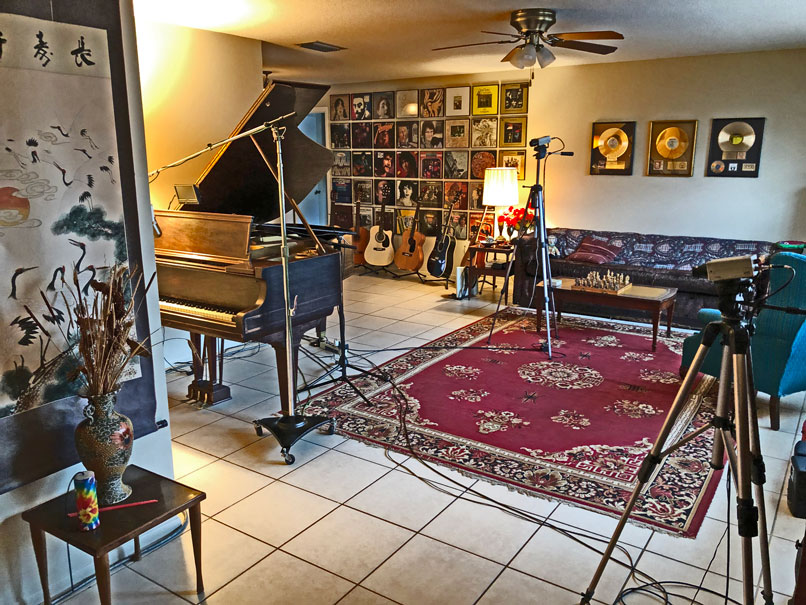
2019 brought the end of a 27 year glorious run in Evanston, Illinois. In November, I sold the building, packed up the now 2 studios and relocated to Sarasota Florida where actually many of my New York and Chicago clients are still performing and recording with me. Still doing all the same work even better, back on the east coast, I hope to see you in front of my microphones soon.
|
| Yours truly, Jim Reeves, Audio Engineer/Audio Consultant/Producer/Composer/Musician/Singer/Maintenance Engineer/AKA-Recording Product Helper 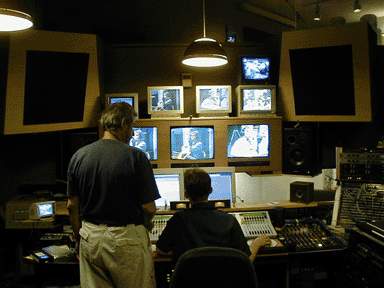 |
| P.S. My kids (among other things) are: Alex; musician/engineer/film Director/producer and has his own Point of Blue Hollywood studio now, too! Eric; is an awesome Chef/Restaurant Manager with great skills and an awesome cullinary entrepreneur. Check him out at his Salt Spoon Gallery. Just click on their links and see what I mean. |
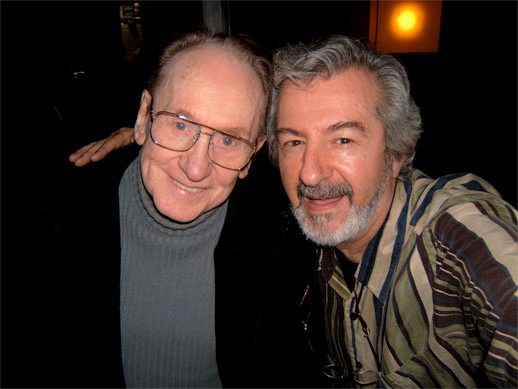
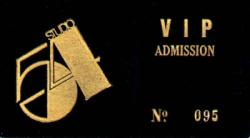
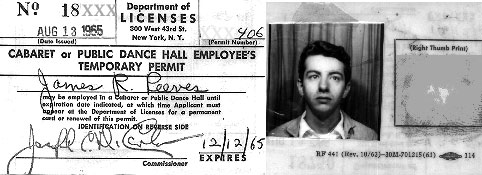
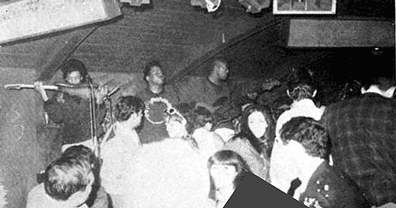 I wanted to insure that the artists that I was producing and mixing back at Studio 3 had more than adequate sound systems to perform with. when Discotheques were unique and had magic Places like Howard Pratt's, Claude Bell's and Geist Ely's discotheques, Le Club, Ondine and The Barge, and Sybil Burton's Arthur's , Il Mio at Del Monaco, Coney Island Pub, Harlowe's, Nepenthe and in clubs like Electric Circus and Steve Paul's The Scene, where Upon completing the installation, I was also hired at Ondine as the original discaire (aka D.J) pioneering onset of a world of Dee Jay'a (aka-disc jockeys) and maintained the sound system, created the off line music mix tapes out of my recording studio for the dinner hours at the club for dining ambiance before and after the Live DJ dance music as well as stage managing and Front Of House sound (what there was of it then) for guys who played there, like Hendrix and The Doors, Joplin, Buffalo Springfield, The Druids of Stonehenge (still going strong today), The Denims, The Losers, The Pilgrims and The Rascals (way before Fillmore East was created).
 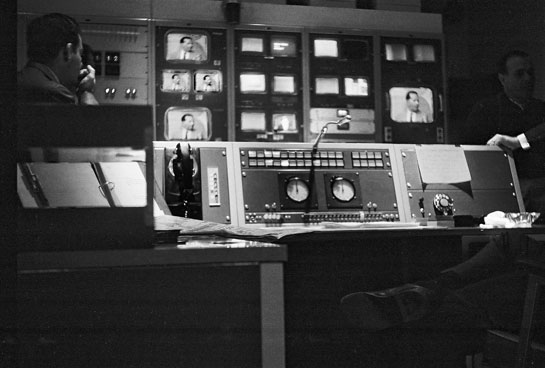 It had been replaced with a new one and was being thrown out. I was there at just the right time. Just as they were about to toss it, I took it across the hall to Channel 5's mail room, packed it up and mailed it to myself.
 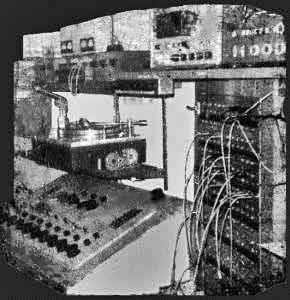 it for audio, attached a piano hinge to one end of it to turn it into a door so I could access it for servicing. I built a plywood cabinet around it. I kept my homemade console tube mic pre-amps and power supplies that I made, inside the patch bay cabinet. I discovered, through my insightful friend, film editor,
  a wonderful audiophile colleague from WNEW Channel 5,
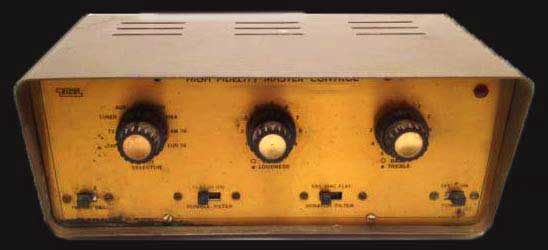 pre-amplifiers.
 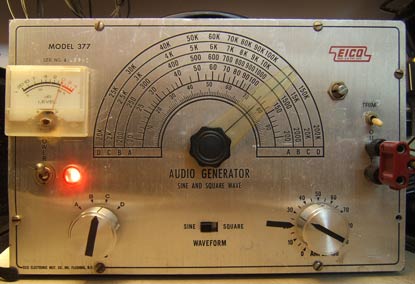 was atop the Concertone.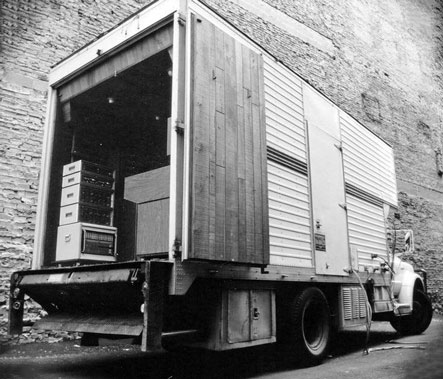
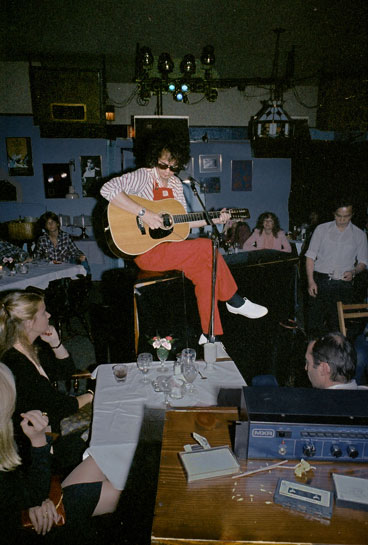 So I took it another step and designed his club, "JP's", as a night club with a recording studio environment with a great monitoring and lighting system, and some video gear too. And it turns out to be a fantastic place for Bonnie Raitt, Phoebe Snow, James and Carly, Dave Mason, Dickie Betts, Manhattan Transfer, Peter Frampton, Jimmy Buffett, Stevie Goodman and Billy Joel, John Bellushi, Bill Murray to jam (to mention a few).
 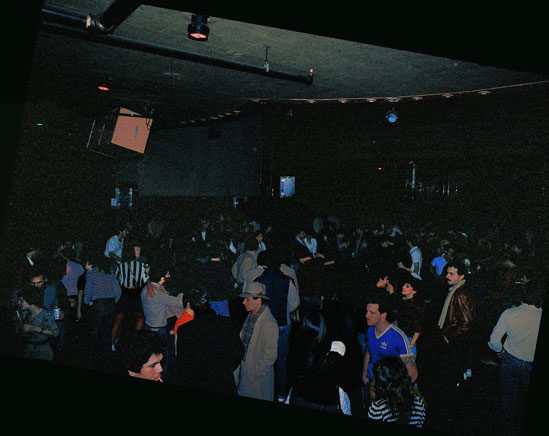 I first introduced John Lennon to the club right then, brought him in and gave him the tour, introduced him to the workers and left him with an invitation to hang out at his leisure as he was right down the street at the Dakota. He loved having a place to mingle among friends in the music world. That was to be our last meeting.
 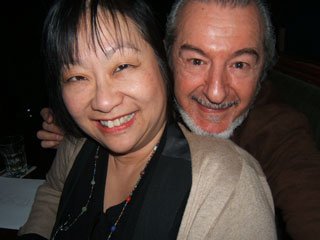 May Pang let me know they had visited often.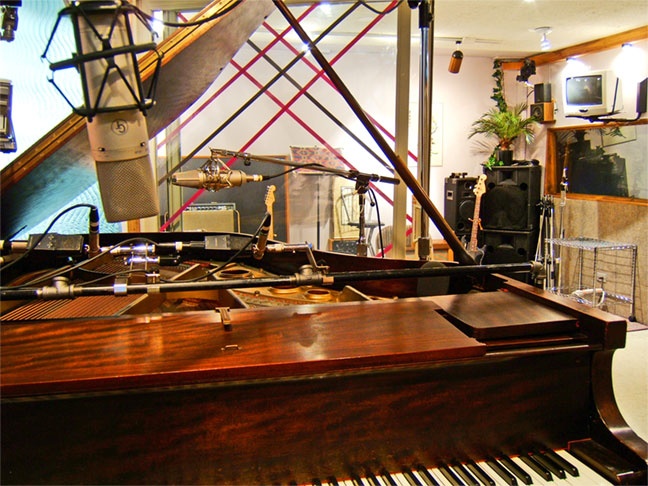
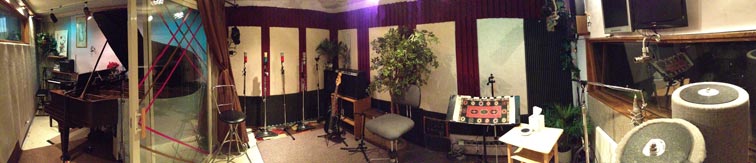
For current activity and what's happening theses days at
Reeves Audio Recording in Evanston, Il - see "Independent Work" below...
| The Studio: |
| Studio Tour | Equipment | Services and Price List | F.A.Q. | Studio Session Pix | Our Location | Links |
| Jim Reeves: |
| Credits - References | Independent Work | Reeves Youtube Channel |
| Recording History: |
| A Visit to Studio 3 |
Les Paul and Mary Ford |
Vintage Sessions |
| Main Page... |
jim@reevesaudio.com
now in
SARASOTA, FLORIDA
Office: 847-409-0437
© 2000 - 2020 Reeves Audio
All Rights Reserved
All Rights Reserved
Many thanks to ted leonard for helping me with this Website Design.